
Biomedical screen printing machine for healthcare | ATMA
Biomedical Screen PrintingBiomedical printing is a process that utilizes high‑precision printing technologies commonly screen printing, micro‑printing, or functional material printing to form conductive electrodes, biosensing layers, or functional material patterns on the surface of substrates. It is widely applied in medical diagnostics, sensors, biochips, and medical electronic devices.★★★ Categories of biomedical screen printing 1. Biosensor ▲Glucose test strips ▲Cholesterol test strips ▲Real‑time health monitoring sensors2. In vitro diagnostic reagent ▲ Rapid test strips ▲ Medical diagnostic strips ▲ Microfluidic diagnostic chips3. Wearable medical device ▲ Skin sensors ▲ Electrocardiogram (ECG) electrode ▲ Physiological monitoring patches4. Biochip ▲DNA / RNA Diagnostic chip ▲Microfluidic diagnostic chip★★★ 1. Insufficient microelectrode pattern accuracy Customer Challenge: Biosensors and glucose test strip electrodes have fine patterns, and if printing accuracy is insufficient, it can easily cause electrode dimension deviations, affecting the stability of sensing signals.Technical Solution: Introduce a high‑resolution CCD visual registration system, combined with precise printing pressure control and high‑tension screens, to ensure consistency between fine electrode patterns and printing.Tangible Benefits: ▲Enhance electrode pattern accuracy ▲ Improve sensing signal stability ▲Improve product consistency★★★ 2.Uneven layer thickness and material distribution Customer Challenge: Biomedical diagnostic components require precise control of the thickness of the conductive layer and the reaction layer; uneven film thickness can easily lead to errors in test resultsTechnical Solution: By adopting precise printing pressure control and a constant‑pressure squeegee system, combined with a stable ink supply mechanism, material transfer and uniform layer thickness distribution can be ensured.Tangible Benefits: ▲Enhance layer thickness uniformity ▲Stabilize detection reaction efficiency ▲Reduce testing errors★★★ 3.Process cleanliness and contamination control Customer Challenge: Biomedical products require a high level of cleanliness, and if process contamination or foreign particles are introduced, product quality and reliability will be affected.Technical Solution: Introduce clean process design and anti‑contamination structures in equipment, with optional dust covers and high efficiency filters to effectively reduce dust and particle contamination; combined with a precision platform and stable transmission system to ensure a clean and stable printing process.Tangible Benefits: ▲Enhance process cleanliness ▲Reduce contamination and defect rate ▲Strengthen product reliability★★★ 4.Insufficient mass production consistency Customer Challenge: Biomedical test strips require large‑scale production, and insufficient equipment stability can easily cause batch‑to‑batch quality variationsTechnical Solution: Adopt a high‑rigidity machine body and a servo‑controlled platform to ensure stable printing accuracy even during long‑term equipment operation. Tangible Benefits: ▲Enhance mass production stability ▲Reduce batch variations ▲Increase overall yield Browse ATMA screen printing equipment by category to reach the right machine type faster. Use categories to narrow by format—sheet, cylinder press or roll-to-roll—and then compare models and accessories.
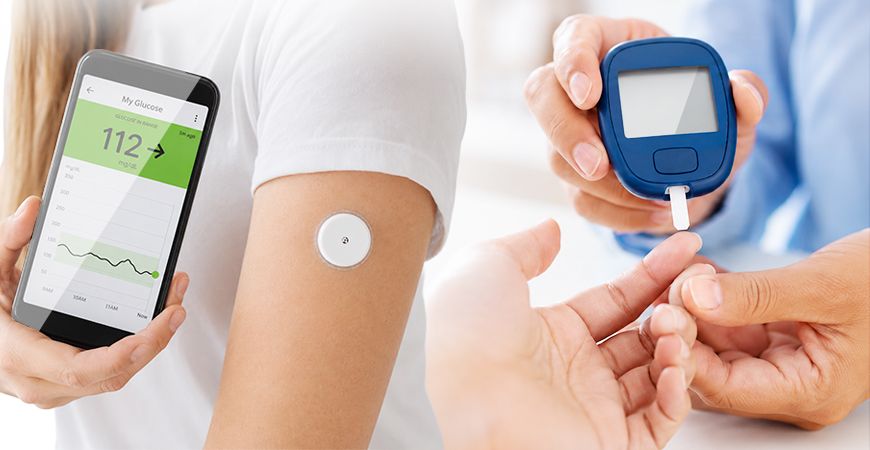
Biomedical screen printing machine for healthcare
ATMA screen printing solution is a crucial process of making the biosensor or test strips
Biomedical Screen Printing
Biomedical printing is a process that utilizes high‑precision printing technologies commonly screen printing, micro‑printing, or functional material printing to form conductive electrodes, biosensing layers, or functional material patterns on the surface of substrates.
It is widely applied in medical diagnostics, sensors, biochips, and medical electronic devices.
★★★ Categories of biomedical screen printing
1. Biosensor
▲Glucose test strips
▲Cholesterol test strips
▲Real‑time health monitoring sensors
2. In vitro diagnostic reagent
▲ Rapid test strips
▲ Medical diagnostic strips
▲ Microfluidic diagnostic chips
3. Wearable medical device
▲ Skin sensors
▲ Electrocardiogram (ECG) electrode
▲ Physiological monitoring patches
4. Biochip
▲DNA / RNA Diagnostic chip
▲Microfluidic diagnostic chip
★★★ 1. Insufficient microelectrode pattern accuracy
Customer Challenge:
Biosensors and glucose test strip electrodes have fine patterns, and if printing accuracy is insufficient, it can easily cause electrode dimension deviations, affecting the stability of sensing signals.
Technical Solution:
Introduce a high‑resolution CCD visual registration system, combined with precise printing pressure control and high‑tension screens, to ensure consistency between fine electrode patterns and printing.
Tangible Benefits:
▲Enhance electrode pattern accuracy
▲ Improve sensing signal stability
▲Improve product consistency
★★★ 2.Uneven layer thickness and material distribution
Customer Challenge:
Biomedical diagnostic components require precise control of the thickness of the conductive layer and the reaction layer; uneven film thickness can easily lead to errors in test results
Technical Solution:
By adopting precise printing pressure control and a constant‑pressure squeegee system, combined with a stable ink supply mechanism, material transfer and uniform layer thickness distribution can be ensured.
Tangible Benefits:
▲Enhance layer thickness uniformity
▲Stabilize detection reaction efficiency
▲Reduce testing errors
★★★ 3.Process cleanliness and contamination control
Customer Challenge:
Biomedical products require a high level of cleanliness, and if process contamination or foreign particles are introduced, product quality and reliability will be affected.
Technical Solution:
Introduce clean process design and anti‑contamination structures in equipment, with optional dust covers and high efficiency filters to effectively reduce dust and particle contamination; combined with a precision platform and stable transmission system to ensure a clean and stable printing process.
Tangible Benefits:
▲Enhance process cleanliness
▲Reduce contamination and defect rate
▲Strengthen product reliability
★★★ 4.Insufficient mass production consistency
Customer Challenge:
Biomedical test strips require large‑scale production, and insufficient equipment stability can easily cause batch‑to‑batch quality variations
Technical Solution:
Adopt a high‑rigidity machine body and a servo‑controlled platform to ensure stable printing accuracy even during long‑term equipment operation.
Tangible Benefits:
▲Enhance mass production stability
▲Reduce batch variations
▲Increase overall yield
Biomedical test strips for healthcare is emerging industry, ATMA screen printing solution provides evenness printing functional ink (such as Silver Paste, Carbon Electrode, Chemistry and Insulation) multi-layer and fine line pattern onto thin film substrate by the approach of sheet by sheet or roll-to-roll process.
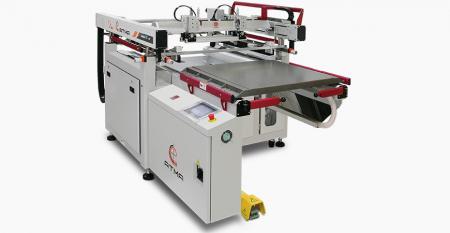
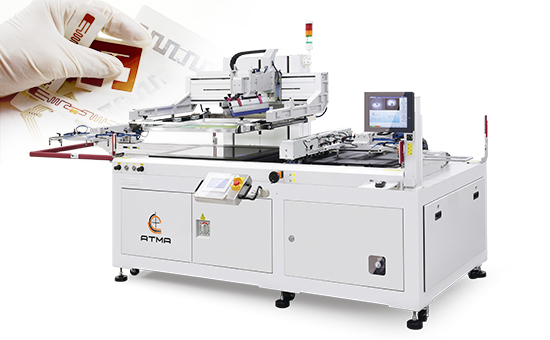
With regard to the approach of sheet by sheet process, ATMA flatbed screen printer with CCD registering provides various solutions as semi-automatic or 3/4 automatic with take-off or full automatic with auto feeding and take-off to meet customer production needs. It is configured with the squeegee auto leveling and the pneumatic equalizer to control effective printing fine line pattern and uniformity multi-layer. Detailed feature and specification can be referred to the applicable models descriptions (as MF model series).
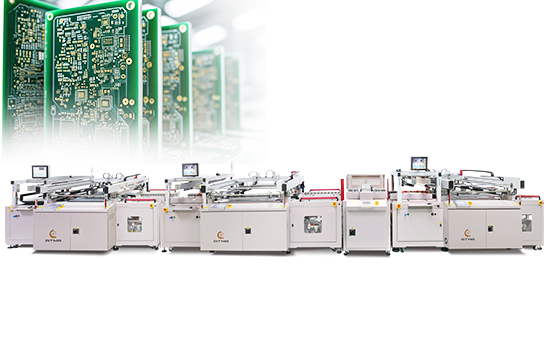
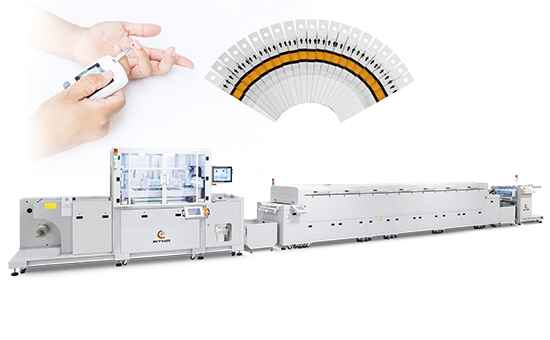
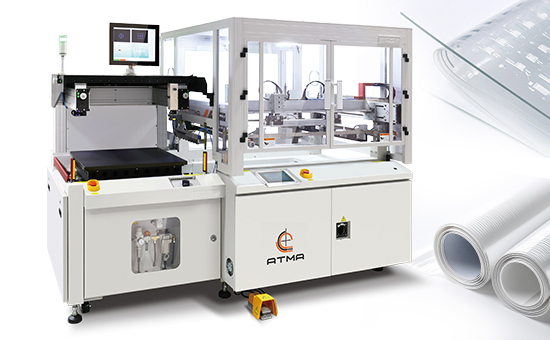
The approach of roll-to-roll printing is designed for all kind of PET coiled material to repeat process massive production of multi-layer printing top and bottom insulation cover for test strips. ATMA fully automatic roll-to-roll screen-printing line is configured with either Sensor or CCD camera registering in accordance with customer production needs. The squeegee is configured with the equalizer to control constant printing air pressure to achieve stable fine line printing quality. Optional auto inspection can be added onto printing line to enhance efficient production.
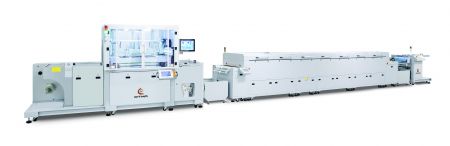
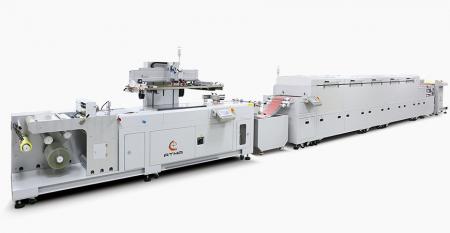
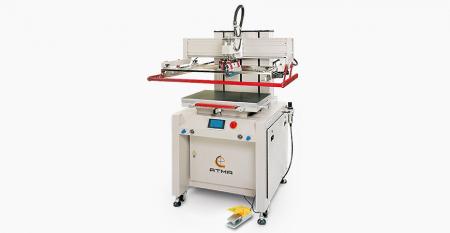
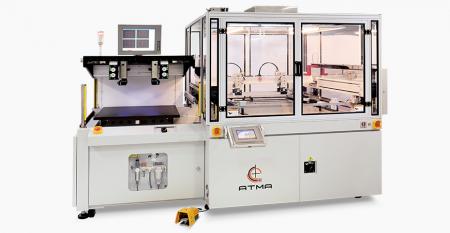
Fully Automatic CCD Registering Screen Printer (max printing area 600x600 mm)
ATMAOE MF66
Suitable for precise screen printing capacity type touch panel, ITO conductive glass, ITO conductive film, blood sugar tester, EL panel, etc. Characteristic : high accuracy of vacuum table flatness, appropriate...
Details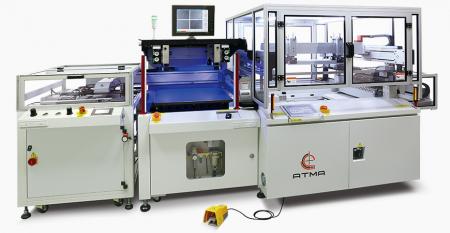
Customer Favorites
 Download
 Biomedical screen printing machine for healthcare | ATMA
Browse our screen printer catalog to compare models by printing format, automation level, and line compatibility—then narrow to the best-fit options.
Since 1979, ATMA has focused on screen printing equipment, supporting buyers in selecting a screen printer and matching accessories like feeders and air dryers.
Tell us your material and output goals—ATMA will propose a screen printer setup and a clear shortlist to move forward.


