
PCB Screen Printing Machine | ATMA
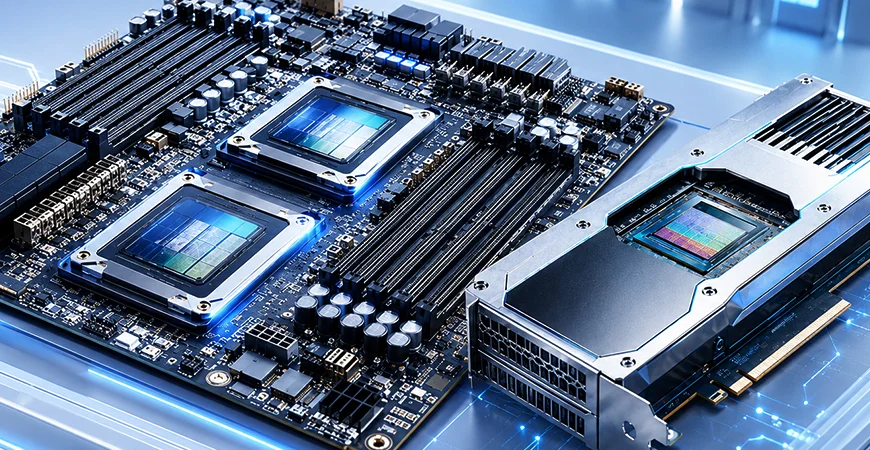
Circuit printing is primarily applied in electronic circuit boards and advanced packaging processes. Through high-precision screen printing, uniform and stable functional patterns can be formed on substrate surfaces, including conductive, insulating, solder mask, and other functional ink layers. This process features high-accuracy alignment, high yield, and stable mass production capability, and is widely used in advanced industries such as artificial intelligence (AI), high-performance computing, telecommunications, and automotive electronics★★★ Categories of circuit screen printing processes1. PCB circuit screen printing ▲Multiple Layer PCB ▲High Layer Count Circuit (HLC) ▲AI Servo Motherboard ▲AI Accelerator Card ▲High-speed Transmission BoardProcess requirements High-precision registration, fine-line printing, and stable ink control.Key requirements High repeatability accuracy, uniform ink layer thickness, and stable mass production process.2. HDI / SLP Substrate Printing ▲HDI High Density Interconnection ▲ SLP Substrate-like PCB ▲Advanced Smart Phone MotherboardProcess requirements Fine-pitch pattern printing, high-precision registration, and low defect rateKey requirements High-resolution printing capability, stable yield and precise positioning control3. Functional Electronics Printing ▲Conductive Silver Paste Printing ▲Sensor Circuit Printing ▲Flexible Printed Circuit (FPC) ▲RF and Antenna Circuit PrintingProcess requirements High conductivity, fine-line printing, high-resolution printing capability, strong adhesion, and environmental reliability.Key requirements High conductivity, fine-line printing, reliability, and environmental durability.★★★ Mass production process challenges1. Difficulty in High-precision Registration Customer Challenges: HDI, SLP, and high multilayer PCBs have high circuit density, while traditional printing equipment lacks sufficient registration accuracy, which can easily lead to pad misalignment, poor opening quality, or short-circuit risks.Technical Solution: Introduce a high-resolution CCD vision registration system, utilizing dual cameras to simultaneously recognize positioning marks and the screen, combined with a high-precision servo platform for automatic compensation and fine adjustment. Integrating a high-rigidity mechanical structure with a precision guide rail system ensures platform motion accuracy and repeatable positioning capabilityTangible Benefits: ▲ Enhance printing registration accuracy. ▲ Reduce circuit misalignment and short-circuit risks. ▲Improve overall yield and process consistency2.Uneven ink film thickness affects quality Customer Challenges: Non-uniform thickness of solder mask ink or conductive paste can easily cause unstable conductivity, insufficient coverage, or appearance defects.Technical Solution: By adopting a high-rigidity printing platform and a precision squeegee pressure control system, with servo-controlled squeegee speed and printing pressure, uniform ink deposition is ensured. The printing head structure provides multi-axis fine adjustment mechanisms for squeegee angle, pressure, and depth, enabling adaptation to different ink viscosities and screen tension conditions.Tangible Benefits: ▲ More uniform layer thickness distribution. ▲ Improved conductivity and insulation layer quality. ▲ Reduced rework and scrap.3. Insufficient process stability in advanced PCB manufacturing. Customer Challenges: For AI server boards and high multilayer PCB, the long process time means that if equipment precision is insufficient, prolonged production can easily result in misalignment and quality fluctuations.Technical Solution: The equipment adopts a high-rigidity welded steel structure with precision-machined reference surfaces, combined with high-accuracy linear guide rails and a servo drive system. Through stable mechanical construction and transmission design, long-term operation can still maintain positioning accuracyTangible Benefits: ▲ Maintain stable quality during long-term mass production. ▲Reduce process fluctuations. ▲ Enhance reliability of advanced products4. Lengthy changeover and machine setup time Customer Challenges: In a multi-product manufacturing environment, lengthy equipment adjustment time reduces overall production line efficiency.Technical Solution: Digital process management with recipe memory enables storage of multiple printing parameter sets covering squeegee speed, pressure, platform positioning, and registration, ensuring fast changeover and consistent production quality. User-friendly HMI enables rapid operation, significantly reducing changeover and setup time to improve production efficiencyTangible Benefits: ▲Significantly shortened changeover time. ▲Improved equipment utilization rate. ▲Increased production line flexibility.5. Unstable quality in micro-via hole plugging Customer Challenges: In HDI and high-density PCB micro-vias are small with high aspect ratios. If via plugging is incomplete or bubbles remain, voids can form in the holes, leading to subsequent electroplating issues and reduced circuit reliabilityTechnical Solution: By adopting high-pressure precision via plugging technology, with stable pressure control and a precise squeegee mechanism, ink is uniformly filled into micro-vias. With precise registration and a stable platform, the hole positions are ensured to fully correspond with the screen mesh openingsTangible Benefits: ▲Improved completeness of plug-via. ▲Reduced bubbles and void defects. ▲Enhanced yield and product reliability in subsequent processes.6. Difficulty in double-sided solder mask registration Customer Challenges: Double-sided solder mask printing requires precise registration with pads and circuits. If registration errors are too large, it can easily cause poor pad coverage or window misplacementTechnical Solution: By introducing a high-precision CCD visual registration system, automatic recognition of positioning marks and screen alignment compensation is achieved for double-sided printing. Combined with a high-accuracy printing platform and stable pressure control, ensure printing positions precision.Tangible Benefitss: ▲Improved solder mask registration accuracy. ▲Reduced pad contamination and short-circuit risk. ▲ Enhanced overall product yield. Browse ATMA screen printing equipment by category to reach the right machine type faster. Use categories to narrow by format—sheet, cylinder press or roll-to-roll—and then compare models and accessories.
PCB Screen Printing Machine
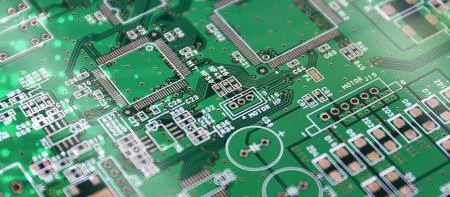
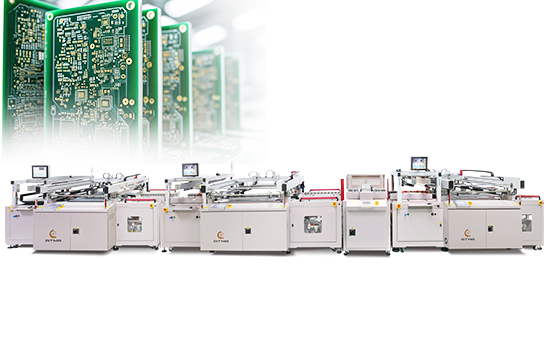
Screen Printing Machine is used to print solder mask, legend, wet-film plug-via process to make PCB
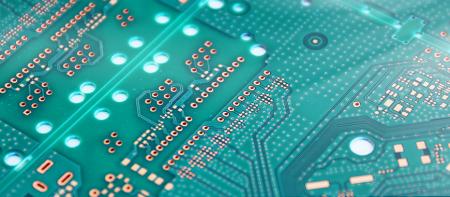
Circuit printing is primarily applied in electronic circuit boards and advanced packaging processes. Through high-precision screen printing, uniform and stable functional patterns can be formed on substrate surfaces, including conductive, insulating, solder mask, and other functional ink layers.
This process features high-accuracy alignment, high yield, and stable mass production capability, and is widely used in advanced industries such as artificial intelligence (AI), high-performance computing, telecommunications, and automotive electronics
★★★ Categories of circuit screen printing processes
1. PCB circuit screen printing
▲Multiple Layer PCB
▲High Layer Count Circuit (HLC)
▲AI Servo Motherboard
▲AI Accelerator Card
▲High-speed Transmission Board
Process requirements
High-precision registration, fine-line printing, and stable ink control.
Key requirements
High repeatability accuracy, uniform ink layer thickness, and stable mass production process.
2. HDI / SLP Substrate Printing
▲HDI High Density Interconnection
▲ SLP Substrate-like PCB
▲Advanced Smart Phone Motherboard
Process requirements
Fine-pitch pattern printing, high-precision registration, and low defect rate
Key requirements
High-resolution printing capability, stable yield and precise positioning control
3. Functional Electronics Printing
▲Conductive Silver Paste Printing
▲Sensor Circuit Printing
▲Flexible Printed Circuit (FPC)
▲RF and Antenna Circuit Printing
Process requirements
High conductivity, fine-line printing, high-resolution printing capability, strong adhesion, and environmental reliability.
Key requirements
High conductivity, fine-line printing, reliability, and environmental durability.
★★★ Mass production process challenges
1. Difficulty in High-precision Registration
Customer Challenges:
HDI, SLP, and high multilayer PCBs have high circuit density, while traditional printing equipment lacks sufficient registration accuracy, which can easily lead to pad misalignment, poor opening quality, or short-circuit risks.
Technical Solution:
Introduce a high-resolution CCD vision registration system, utilizing dual cameras to simultaneously recognize positioning marks and the screen, combined with a high-precision servo platform for automatic compensation and fine adjustment.
Integrating a high-rigidity mechanical structure with a precision guide rail system ensures platform motion accuracy and repeatable positioning capability
Tangible Benefits:
▲ Enhance printing registration accuracy.
▲ Reduce circuit misalignment and short-circuit risks.
▲Improve overall yield and process consistency
2.Uneven ink film thickness affects quality
Customer Challenges:
Non-uniform thickness of solder mask ink or conductive paste can easily cause unstable conductivity, insufficient coverage, or appearance defects.
Technical Solution:
By adopting a high-rigidity printing platform and a precision squeegee pressure control system, with servo-controlled squeegee speed and printing pressure, uniform ink deposition is ensured.
The printing head structure provides multi-axis fine adjustment mechanisms for squeegee angle, pressure, and depth, enabling adaptation to different ink viscosities and screen tension conditions.
Tangible Benefits:
▲ More uniform layer thickness distribution.
▲ Improved conductivity and insulation layer quality.
▲ Reduced rework and scrap.
3. Insufficient process stability in advanced PCB manufacturing.
Customer Challenges:
For AI server boards and high multilayer PCB, the long process time means that if equipment precision is insufficient, prolonged production can easily result in misalignment and quality fluctuations.
Technical Solution:
The equipment adopts a high-rigidity welded steel structure with precision-machined reference surfaces, combined with high-accuracy linear guide rails and a servo drive system. Through stable mechanical construction and transmission design, long-term operation can still maintain positioning accuracy
Tangible Benefits:
▲ Maintain stable quality during long-term mass production.
▲Reduce process fluctuations.
▲ Enhance reliability of advanced products
4. Lengthy changeover and machine setup time
Customer Challenges:
In a multi-product manufacturing environment, lengthy equipment adjustment time reduces overall production line efficiency.
Technical Solution:
Digital process management with recipe memory enables storage of multiple printing parameter sets covering squeegee speed, pressure, platform positioning, and registration, ensuring fast changeover and consistent production quality.
User-friendly HMI enables rapid operation, significantly reducing changeover and setup time to improve production efficiency
Tangible Benefits:
▲Significantly shortened changeover time.
▲Improved equipment utilization rate.
▲Increased production line flexibility.
5. Unstable quality in micro-via hole plugging
Customer Challenges:
In HDI and high-density PCB micro-vias are small with high aspect ratios. If via plugging is incomplete or bubbles remain, voids can form in the holes, leading to subsequent electroplating issues and reduced circuit reliability
Technical Solution:
By adopting high-pressure precision via plugging technology, with stable pressure control and a precise squeegee mechanism, ink is uniformly filled into micro-vias.
With precise registration and a stable platform, the hole positions are ensured to fully correspond with the screen mesh openings
Tangible Benefits:
▲Improved completeness of plug-via.
▲Reduced bubbles and void defects.
▲Enhanced yield and product reliability in subsequent processes.
6. Difficulty in double-sided solder mask registration
Customer Challenges:
Double-sided solder mask printing requires precise registration with pads and circuits. If registration errors are too large, it can easily cause poor pad coverage or window misplacement
Technical Solution:
By introducing a high-precision CCD visual registration system, automatic recognition of positioning marks and screen alignment compensation is achieved for double-sided printing. Combined with a high-accuracy printing platform and stable pressure control, ensure printing positions precision.
Tangible Benefitss:
▲Improved solder mask registration accuracy.
▲Reduced pad contamination and short-circuit risk.
▲ Enhanced overall product yield.
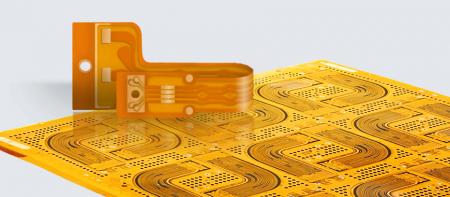
Flexible circuits are typically manufactured using a polyimide (Kapton) material and one to multiple layers of copper. The copper foil was processed by etching treatment to emerge fine line circuits, legend (or marks), and solder mask is printed afterward. ATMA provides two solutions for printing solder mask, legend (or marks), silver and carbon paste onto flexible PCB like flatbed and roll-to-roll screen printing as stated below :
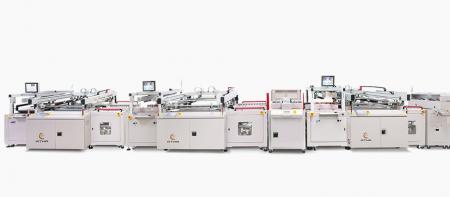
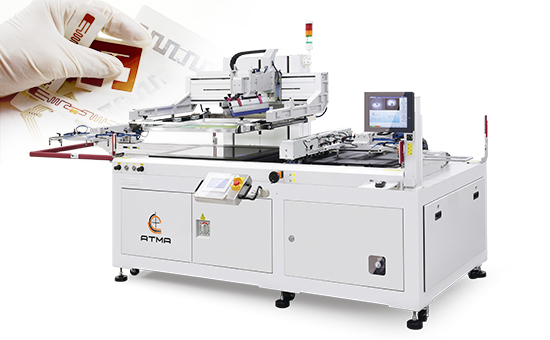
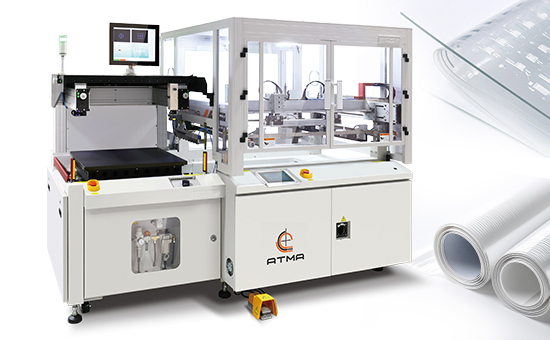
1.ATMA flatbed screen printer is suitable for printing sheet by sheet to continue processing after upstream image exposure and etching process. Since ATMA flatbed screen printer has the vacuum tabletop which is machined to achieve high accuracy of flatness and is equipped with the adjustable features for printing to attain even ink layer thickness, and the delicate fine line of legend (or marks) is printed on top of solder mask as well. The optional unloading device can be added to upgrade as 3/4 automatic to save labor increasing production efficiency.
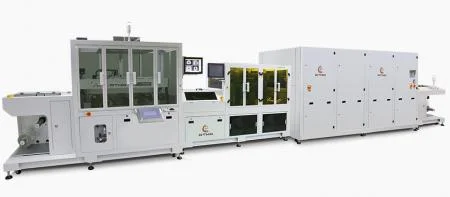
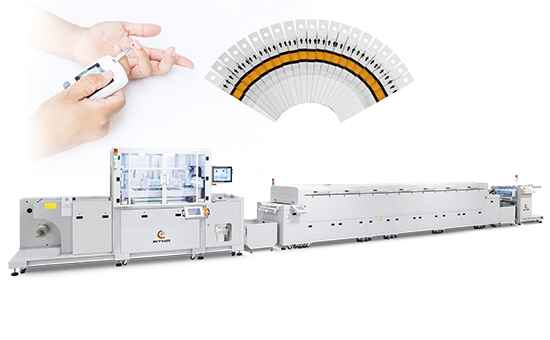
2.ATMA roll-to-roll screen printer is suitable for high productivity printing the coiled flexible foils to continue processing after upstream image exposure and etching process. This screen printer is equipped with a high-resolution CCD camera to achieve accuracy registering and is incorporated with a drying section to meet high production efficiency.
Customer Favorites
 Download
 PCB Screen Printing Machine | ATMA
Browse our screen printer catalog to compare models by printing format, automation level, and line compatibility—then narrow to the best-fit options.
Since 1979, ATMA has focused on screen printing equipment, supporting buyers in selecting a screen printer and matching accessories like feeders and air dryers.
Tell us your material and output goals—ATMA will propose a screen printer setup and a clear shortlist to move forward.


